
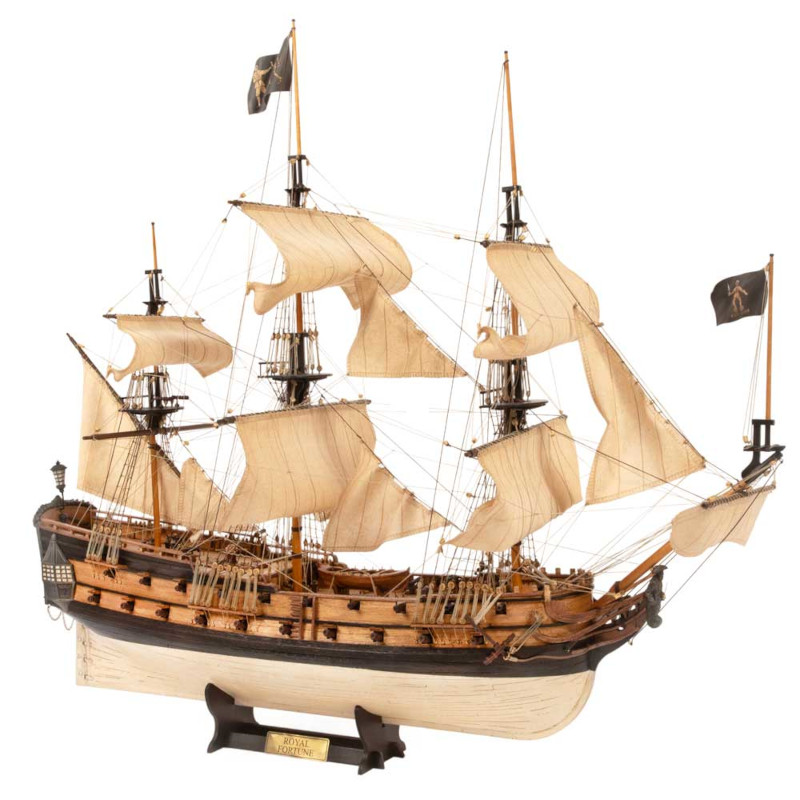
Royal Fortune pirate ship (1/65)
- Brand: OcCre
- Product Code: OC12015
- Availability:Last piece
- Stock level:


-
Price: 254.99€
- Ex Tax: 210.74€
Accessories


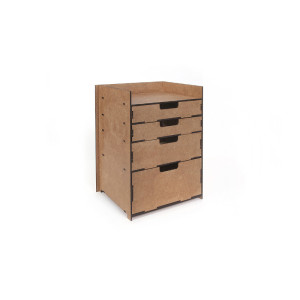

Option parts
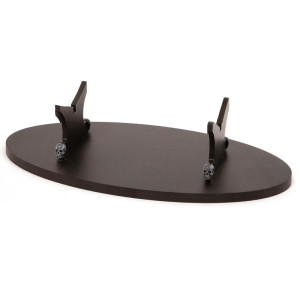
Skull-Themed Display Stand for Pirate Ship Models
Product Code: OC19171
Brand: OcCre
Price: 24.99€
Availability: In stock
General Product Safety Regulation
Manufacturer:OCCRE Import S.L
C / Repuntadora 2-6, nave 14, 2nd floor
8302
Mataró
Spain
occre@occre.com
Responsible person within the EU:
OCCRE Import S.L
C / Repuntadora 2-6, nave 14, 2nd floor
8302
Mataró
Spain
occre@occre.com
Description
Type: Wooden construction kit
Scale: 1:65
Dimensions
Length: 642 mm
Height: 563 mm
Width: 285 mm
Historical Background
Bartholomew Roberts - Black Bart - was the most successful pirate in history, capturing up to 470 vessels in just three years, between 1719 and 1722.
Born in Wales in 1682, he was serving as third mate on a slave ship when he was captured by the pirate Howell Davis. He resisted at first. But when Davis was killed in an ambush, the crew elected Roberts captain by unanimous vote — drawn to his charisma and exceptional seamanship.
He was nothing like the pirate anyone imagined. He kept his distance from his crew, conducting himself more like a naval officer than a buccaneer.
Far from the popular image of the dishevelled pirate, Roberts was known for his elegance: he wore crimson silk, a feathered hat and a gold chain bearing a diamond-encrusted cross. He was regarded as the best-dressed pirate of his age.
The name "Black Bart" never appeared in his lifetime. It came later, in a poem - as if legend needed time to catch up with him.
After taking command, his first act was to avenge the death of Howell Davis: he attacked the Portuguese fort and burned the ships at the port where Davis had fallen.
He then sailed for Brazil, where he encountered a Portuguese fleet of 42 merchant vessels escorted by two warships. In a bold manoeuvre, Roberts approached with his crew hidden below decks - a single ship, seemingly harmless. The Portuguese took him for a French merchant vessel.
They boarded the richest ship in the fleet with just two casualties. The haul: 40,000 gold coins, sugar, tobacco, furs and a diamond cross pendant destined for the King of Portugal.
Roberts sailed to Barbados, where he attempted to seize two vessels - the Summerset and the Philipa — which turned out to be pirate hunters. He barely escaped, forced to jettison most of his cargo and weapons, while the Sea King abandoned him. The episode left him with a lasting hatred of Barbadians.
He then made for Martinique, intending to careen his ship, but was discovered - the governor dispatched several armed sloops to hunt him down. Once again, Roberts slipped away by the narrowest of margins.
These two encounters gave rise to his infamous flag, depicting him standing atop the heads of a Barbadian and a Martinican - ABH (A Barbadian's Head) beneath one foot, AMH (A Martinican's Head) beneath the other.
With pirate hunters swarming the Caribbean, Roberts and his men turned north to Newfoundland. In June 1720, he raided the port of Trepassey - a major fishing and salting hub - capturing 22 merchant ships and 150 fishing vessels, most of which surrendered without resistance.
He kept one vessel, the Bristol Galley, as his flagship and renamed her Royal Fortune - the first of several ships to bear that name. During July 1720, he captured nine or ten French ships, requisitioned one, armed her with 26 cannon and renamed her Good Fortune.
His relentless campaign made Roberts one of the most feared names across the Caribbean and the Americas.
Anchored off Cape Lopez, near the equator, discipline began to unravel. Discontent mounted - and so did the drinking.
On 5 February 1722, a vessel appeared on the horizon that the crew believed to be a merchant ship. Only the Ranger, under James Skyrme, was in a state to give chase. The "merchant ship" was, in fact, the British warship HMS Swallow, commanded by Captain Challoner Ogle. After two hours of exchanged fire, the Ranger struck her colours — ten pirates dead and Skyrme having lost a leg.
The HMS Swallow returned to Cape Lopez and found the Royal Fortune there, her crew celebrating the capture of a vessel called the Neptune. Roberts quickly realised the approaching ship was a warship - not the Ranger returning.
His men were in no condition to face a superior warship. They attempted to flee, but a navigational error and a sudden drop in wind left them dangerously exposed. Roberts was the only man killed in the Swallow's first broadside, struck by grapeshot. His body was hastily thrown overboard before the authorities could claim it. The crew fought on for another two hours before surrendering when their ship was too badly damaged to continue.
In total, 267 pirates were captured aboard the Royal Fortune and the Ranger and transported to Cape Coast Castle in Guinea, where they were tried.
Bartholomew Roberts was known to act arbitrarily and could at times be cruel and domineering — though Black Bart was less brutal towards prisoners than many of his contemporaries. He maintained a strict code of conduct, one of the few pirate articles to have survived to this day.
He captured approximately 470 ships over three years - an extraordinary figure, though it should be noted that more than half were fishing vessels. Many historians mark the death of Roberts as the true end of the Golden Age of Piracy: no one of his stature emerged in the year that followed.